Private & confidential
Dr. Chen Wei
Chinese name: 陈崴
Professor, Chief Physician, Doctoral Supervisor . Nephrology
Professor Chen Wei is Director of Internal Medicine and Director of Nephrology at the First Affiliated Hospital of Sun Yat-sen University and Director of the NHC Key Laboratory of Clinical Nephrology. She specialises in immune-related kidney disease, including lupus nephritis, refractory nephrotic syndrome and IgA nephropathy, and leads research on their pathogenesis and treatment.
20+
Years of clinical practice in nephrology
120+
Peer-reviewed SCI publications on kidney disease
50+
Multinational clinical trials undertaken in five years
About Dr. Chen Wei
Professor Chen Wei is Director of Internal Medicine and Director of Nephrology at the First Affiliated Hospital of Sun Yat-sen University, and Director of the NHC Key Laboratory of Clinical Nephrology. She has devoted her career to chronic kidney disease, with a focus on immune-related glomerular disease. Her clinical work covers lupus nephritis, refractory nephrotic syndrome, IgA nephropathy and peritoneal dialysis, and her research uses single-cell and histological techniques to uncover the immune mechanisms of lupus nephritis and to predict treatment response. She is active in national nephrology societies and training programmes.

1、Director of Internal Medicine and Director of Nephrology at the First Affiliated Hospital of Sun Yat-sen University
2、Director of the NHC Key Laboratory of Clinical Nephrology (Sun Yat-sen University)
3、Professor and doctoral supervisor in nephrology
4、Leader of research on the immune mechanisms and treatment of lupus nephritis
5、Author of studies using single-cell and histological techniques in kidney disease
6、Active member of national nephrology societies and training programmes
Dr. Chen Wei ’s Three Key Areas of Expertise
Three areas of focused expertise, each supported by a deep subspecialty team, high case volumes and an English-speaking care pathway coordinated by Orisene.
Lupus nephritis
She diagnoses and treats lupus nephritis with kidney biopsy, immunosuppressive therapy and close monitoring, using immune and histological assessment to classify the disease and tailor treatment that controls inflammation and protects kidney function over the long term for patients in clinical practice.
IgA nephropathy
She manages IgA nephropathy with risk stratification, blood pressure control and individualised immunosuppression, using clinical and pathological markers to identify patients at risk of progression and to delay kidney failure and the need for dialysis as long as possible in routine care.
Peritoneal dialysis and refractory nephrotic syndrome
She provides peritoneal dialysis and treats refractory nephrotic syndrome, integrating dialysis prescription, nutrition and immunosuppressive therapy to reduce proteinuria, control symptoms and maintain the quality of life of patients with chronic kidney disease and kidney failure in routine clinical practice.
More:chronic kidney disease——integrated management; membranous nephropathy——treatment; renal pathology——diagnosis; dialysis——peritoneal and haemodialysis; rare kidney disease——diagnosis
Selected cases, research & publications
Representative work drawn from documented clinical treatments, publicly indexed literature, and hospital project records, reflecting the depth of this physician's hands-on expertise and academic rigor.
1. Multi-Stain Deep Learning Model for Lupus Nephritis Treatment Response
This study developed a deep learning model that analyses four routine kidney biopsy stains (H&E, PAS, PASM and Masson) to predict twelve-month treatment response in lupus nephritis. Integrated multi-stain modelling reached an area under the curve of 0.901 internally and 0.840 externally, outperforming conventional clinical and pathological predictors and supporting individualised treatment decisions for patients with lupus nephritis.
Related link: https://pubmed.ncbi.nlm.nih.gov/39733792/
2. Single-Cell Profiling of CD163+ Dendritic Cells in Lupus Nephritis
Using kidney biopsy single-cell transcriptomics, this research identified a CD163+ dendritic cell population enriched in lupus nephritis tissue that drives inflammation, antigen presentation and T-cell activation. Its abundance correlated with eGFR and 24-hour proteinuria and independently predicted immunosuppressive treatment response with an area under the curve of about 0.90, providing a basis for individualised immunotherapy.
Related link: https://doi.org/10.1136/ard-2023-224788
3. Gut-Kidney ILC3 Migration in Renal Fibrosis
This preclinical and clinical study showed that after kidney injury, intestinal CXCR6+ group 3 innate lymphoid cells migrate to the kidney and worsen fibrosis. Through PD-1-controlled IL-23 receptor signalling, they amplify IL-17A production and activate fibroblasts. Blocking this gut-kidney axis reduced fibrosis, suggesting new targets for chronic kidney disease therapy.
Related link: https://doi.org/10.1016/j.immuni.2024.05.004
4. KIDS: Non-Invasive AI Diagnosis of Chronic Kidney Disease from Retinal Images
The Kidney Intelligent Diagnosis System (KIDS) uses artificial intelligence to analyse colour fundus photographs for non-invasive chronic kidney disease assessment. Built on 13,144 retinal images, it screens for chronic kidney disease, predicts five common pathological types and forecasts progression, outperforming nephrologists by roughly 27% in accuracy and helping patients who cannot undergo kidney biopsy.
Related link: https://www.nature.com/articles/s41467-025-62273-0
5. Multicentre Trial of Enarodustat for Anaemia in Dialysis-Dependent Chronic Kidney Disease
Professor Chen Wei led two multicentre clinical trials of enarodustat, a HIF-PHI agent, that supported its approval for anaemia in chronic kidney disease patients on dialysis, including both haemodialysis and peritoneal dialysis. The programme extended the drug’s indication to dialysis and non-dialysis adults, with enrolment among the highest nationally, improving anaemia management for kidney failure patients.
Related link: http://gcp.fahsysu.org.cn/article/21244
6. Peritoneal Dialysis Guangzhou Model and AI Management Platform
The team established a peritoneal dialysis satellite-centre system known internationally as the Guangzhou model, standardising peritoneal dialysis care and training thousands of clinicians across China. They then launched the world’s first peritoneal dialysis large language model and AI assistant, supporting clinicians and patients with risk stratification, complication recognition and personalised management for home dialysis.
Related link: https://www.fahsysu.org.cn/index.php/article/35382
Where Dr. Chen Wei practices
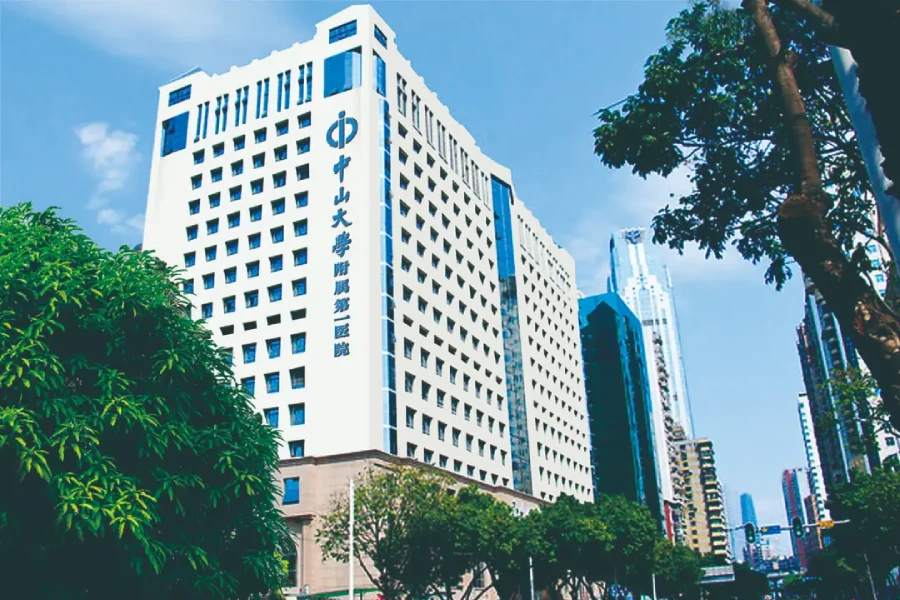
The First Affiliated Hospital, Sun Yat-sen University
Chinese name: 中山大学附属第一医院
Founded in 1910, the First Affiliated Hospital of Sun Yat-sen University, a national comprehensive medical university hospital, holds 36 national clinical key specialties, serves 15,000 daily outpatients, achieved A++ national performance rating and pioneered the world's first ischemia-free organ transplant.
Since 1910
116 years of care
36
National key specialties
15,000+
Daily outpatient visits
327
National key specialties
Appointments with this physician are booked through official hospital channels only, coordinated end-to-end by Orisene.
Why patients travel to China for treatment
Six reasons international patients now put China on their shortlist — from internationally aligned clinical capability to the policy channels that make treatment here genuinely reachable.
Clinical capability at international standard
Chinese hospitals deliver internationally aligned protocols, performing vast volumes of advanced robotic, minimally invasive, and complex transplant surgeries annually. This massive clinical data and highly specialized workforce ensure world-class outcomes, even for rare and complex cases.
Diagnostics and treatment in days, not months
A full medical workup that typically means months of waiting elsewhere is completed in China within 48–72 hours. Imaging, labs, and multidisciplinary consultations are integrated into a single visit, allowing treatment to commence immediately.
Transparent, itemised pricing
Chinese healthcare offers legally binding, itemised cost estimates before treatment begins, eliminating hidden fees or surprise billing. Due to national centralized procurement, total expenses remain 40–70% lower than comparable care in Western Europe or North America.
Policy channels that open the door
China facilitates access through 240-hour visa-free transit and dedicated medical visa routes. Policies like the Greater Bay Area drug pathway and Boao Lecheng’s pilot zone allow designated hospitals to administer innovative therapies not yet globally approved.
Consulting this physician, step by step
From the first message to the follow-up after you fly home, one coordinator, no paperwork on your side.
01
Day 0
- Share your storyA private consultation with an Orisene advisor, by message, phone or video. Send medical records in any language. Nothing is shared with the hospital yet.
02
Days 1–3
- Records review & matchingOrisene translates and presents your case to the right specialist. The hospital returns a tailored care plan, with costs itemised once that plan is confirmed.
03
Days 3–7
- Your consultationAppointments are booked through official hospital channels only. Your navigator accompanies every visit with real-time interpretation, so you can focus on one thing: being cared for.
04
After you fly home
- Reports & follow-upTranslated reports and prescriptions delivered within days, remote follow-up coordination with your physicians at home, and a standing line to your navigator.
Orisene offers English and multilingual services, a professional medical interpreter at every consultation, plus translation of your records, reports and prescriptions.
Ready to plan your consultation with Dr. Chen Wei?
Send your records in any language. An Orisene advisor will reply within 2 hours, present your case to the right specialist, and return a tailored care plan with itemised costs, before anything is booked. Simple. Private. Efficient.
Information Sources
This physician profile is compiled by the Orisene team from publicly available online sources and verified at the time of publication. Details may change, and physician availability is confirmed at the time of booking.
- First Affiliated Hospital of Sun Yat-sen University Official Expert Page: https://www.fahsysu.org.cn/index.php/node/808
- PubMed Author Records (lupus nephritis research): https://pubmed.ncbi.nlm.nih.gov/38290829/
Disclaimer: This information is for general educational purposes only and is not a substitute for professional medical advice, diagnosis, or treatment. Always consult a qualified healthcare provider for personal medical guidance.
Mention of any specific product, brand, or manufacturer is for informational purposes only and does not constitute an endorsement or recommendation by Dr. Chen Wei.