Private & confidential
Dr. Li Yimin
Chinese name: 黎毅敏
Chief Physician, Professor, Doctoral Supervisor . Critical Care Medicine & Respiratory Critical Care
Dr. Li Yimin is Secretary of the Party Committee and Head of Critical Care Medicine at the First Affiliated Hospital of Guangzhou Medical University. A leading expert in respiratory intensive care, he directed the critical care of patients during the SARS and COVID-19 outbreaks, specialising in ARDS, sepsis, mechanical ventilation and extracorporeal membrane oxygenation.
over 30 years
Critical care medicine experience
100+ papers
Peer-reviewed publications
1 Grand Prize and 1 First Class
Provincial and ministerial science awards
About Dr. Li Yimin
Dr. Li Yimin is Secretary of the Party Committee and Head of Critical Care Medicine at the First Affiliated Hospital of Guangzhou Medical University, where he also leads the department of critical care medicine. He has devoted more than three decades to intensive care and respiratory critical care, and served on the frontline of the SARS epidemic in 2003 and the COVID-19 pandemic, treating patients with severe pneumonia, acute respiratory distress syndrome and sepsis. His research focuses on mechanical ventilation, ECMO and severe infection. He has received several national and provincial science and technology awards.
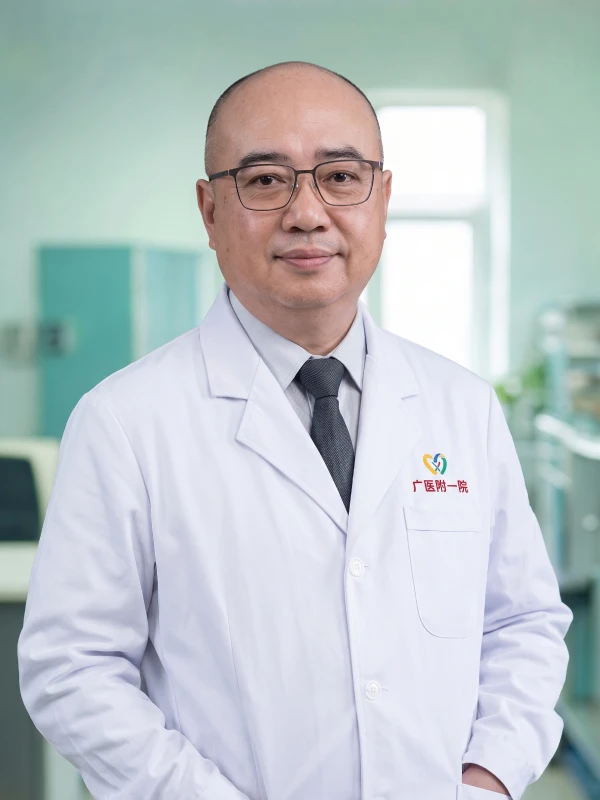
1、Secretary of the Party Committee and Head of Critical Care Medicine, First Affiliated Hospital of Guangzhou Medical University
2、Academic leader of the national key clinical specialty in critical care medicine
3、Standing Committee Member of the Chinese Society of Critical Care Medicine
4、Deputy Head of the Critical Care Group of the Chinese Thoracic Society
5、Chairman of the Guangdong Society of Critical Care Medicine
6、Recipient of the first-class merit for fighting SARS in Guangdong (2003) and multiple national and provincial science and technology awards
7、Lead expert in the intensive care of patients during the SARS and COVID-19 outbreaks
Dr. Li Yimin ’s Three Key Areas of Expertise
Three areas of focused expertise, each supported by a deep subspecialty team, high case volumes and an English-speaking care pathway coordinated by Orisene.
Acute respiratory distress syndrome
He manages acute respiratory distress syndrome with lung-protective mechanical ventilation, prone positioning and extracorporeal membrane oxygenation, closely monitoring oxygenation and organ function to improve survival in critically ill patients with severe pneumonia, sepsis or influenza-related lung injury in the intensive care unit.
Sepsis and septic shock
He treats sepsis and septic shock with early antibiotic therapy, source control, haemodynamic monitoring and organ support, coordinating multidisciplinary intensive care to stabilise circulation, correct metabolic derangement and reduce mortality in patients with severe infection and multiple organ dysfunction and critical illness.
Respiratory failure and mechanical ventilation
He provides invasive and non-invasive ventilation, airway management and weaning for acute and chronic respiratory failure, using respiratory physiology and diaphragm assessment to optimise ventilator settings and shorten ventilation, helping critically ill patients recover breathing and avoid complications in the intensive care unit.
More:severe pneumonia——intensive care; extracorporeal membrane oxygenation——management; hospital-acquired infection——prevention; multiple organ failure——support; post-intensive care——rehabilitation
Selected cases, research & publications
Representative work drawn from documented clinical treatments, publicly indexed literature, and hospital project records, reflecting the depth of this physician's hands-on expertise and academic rigor.
1. Mechanical stress and lung fibrosis in ARDS: the role of midkine
A mechanistic study by the Guangzhou critical care group showing that mechanical stress during invasive ventilation induces midkine, a growth factor that promotes pulmonary fibrosis in acute respiratory distress syndrome, providing a potential therapeutic target to limit ventilator-induced lung injury in critically ill patients.
Related link: https://pubmed.ncbi.nlm.nih.gov/25945397/
2. Targeting midkine to prevent ARDS-associated lung fibrosis
An editorial commentary discussing how midkine links ventilator-induced mechanical stress with fibroproliferative remodeling in acute respiratory distress syndrome, and how blocking this molecular pathway may reduce long-term pulmonary fibrosis in critically ill patients receiving mechanical ventilation in the intensive care unit.
Related link: https://pubmed.ncbi.nlm.nih.gov/26230229/
3. A clinical risk model predicting hospital mortality in mechanically ventilated ARDS
A retrospective cohort study developing and validating a clinical risk model that predicts hospital mortality in patients with acute respiratory distress syndrome requiring mechanical ventilation, helping intensive care physicians stratify severe ARDS patients and guide ventilation and treatment decisions in China.
Related link: https://pubmed.ncbi.nlm.nih.gov/35820835/
4. Critical care response to the COVID-19 outbreak: the Guangdong experience
A multicenter report describing how intensive care units in Guangdong, China, organized surge capacity, protective equipment and mechanical ventilation strategies to manage critically ill patients with coronavirus disease 2019, offering practical and transferable lessons for pandemic critical care in intensive care units worldwide.
Related link: https://pubmed.ncbi.nlm.nih.gov/33262968/
5. Extracorporeal membrane oxygenation for severe respiratory failure during epidemics and pandemics
A narrative review summarizing the indications, technical considerations and clinical outcomes of extracorporeal membrane oxygenation for patients with severe respiratory failure caused by epidemic and pandemic respiratory viral infections, guiding appropriate ECMO use in intensive care units during outbreaks and public health emergencies.
Related link: https://pubmed.ncbi.nlm.nih.gov/32296808/
6. Chinese clinical practice guidelines for the diagnosis and treatment of acute respiratory distress syndrome
A national clinical practice guideline developed by Chinese critical care and respiratory experts that standardizes the diagnosis, mechanical ventilation, prone positioning and extracorporeal support for adult patients with acute respiratory distress syndrome, aiming to improve consistent critical care across hospitals in China.
Related link: https://doi.org/10.1007/s44231-025-00081-2
Where Dr. Li Yimin practices
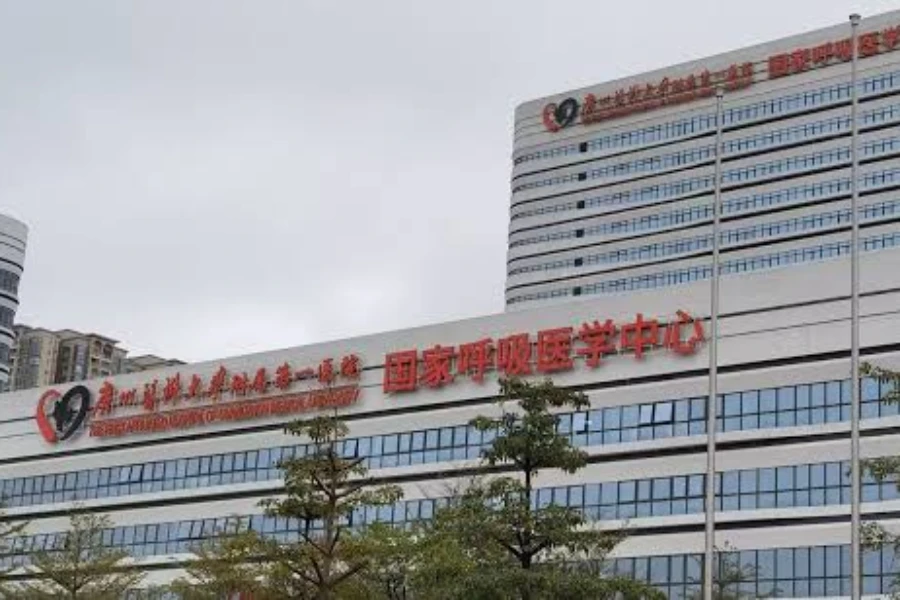
The First Affiliated Hospital of Guangzhou Medical University
Chinese name: 广州医科大学附属第一医院
Guangzhou Medical University First Affiliated Hospital, founded in 1903 and led by respiratory scientist Academician Zhong Nanshan, hosts the National Respiratory Medical Center and a national key laboratory, offering 13 national key specialties across 2,850 beds as one of China's leading respiratory-care institutions.
Since 1903
123 years of care
2,850
Licensed beds
15
National-level platforms
Host institution
Licensed beds
Appointments with this physician are booked through official hospital channels only, coordinated end-to-end by Orisene.
Why patients travel to China for treatment
Six reasons international patients now put China on their shortlist — from internationally aligned clinical capability to the policy channels that make treatment here genuinely reachable.
Clinical capability at international standard
Chinese hospitals deliver internationally aligned protocols, performing vast volumes of advanced robotic, minimally invasive, and complex transplant surgeries annually. This massive clinical data and highly specialized workforce ensure world-class outcomes, even for rare and complex cases.
Diagnostics and treatment in days, not months
A full medical workup that typically means months of waiting elsewhere is completed in China within 48–72 hours. Imaging, labs, and multidisciplinary consultations are integrated into a single visit, allowing treatment to commence immediately.
Transparent, itemised pricing
Chinese healthcare offers legally binding, itemised cost estimates before treatment begins, eliminating hidden fees or surprise billing. Due to national centralized procurement, total expenses remain 40–70% lower than comparable care in Western Europe or North America.
Policy channels that open the door
China facilitates access through 240-hour visa-free transit and dedicated medical visa routes. Policies like the Greater Bay Area drug pathway and Boao Lecheng’s pilot zone allow designated hospitals to administer innovative therapies not yet globally approved.
Consulting this physician, step by step
From the first message to the follow-up after you fly home, one coordinator, no paperwork on your side.
01
Day 0
- Share your storyA private consultation with an Orisene advisor, by message, phone or video. Send medical records in any language. Nothing is shared with the hospital yet.
02
Days 1–3
- Records review & matchingOrisene translates and presents your case to the right specialist. The hospital returns a tailored care plan, with costs itemised once that plan is confirmed.
03
Days 3–7
- Your consultationAppointments are booked through official hospital channels only. Your navigator accompanies every visit with real-time interpretation, so you can focus on one thing: being cared for.
04
After you fly home
- Reports & follow-upTranslated reports and prescriptions delivered within days, remote follow-up coordination with your physicians at home, and a standing line to your navigator.
Orisene offers English and multilingual services, a professional medical interpreter at every consultation, plus translation of your records, reports and prescriptions.
Ready to plan your consultation with Dr. Li Yimin?
Send your records in any language. An Orisene advisor will reply within 2 hours, present your case to the right specialist, and return a tailored care plan with itemised costs, before anything is booked. Simple. Private. Efficient.
Information Sources
This physician profile is compiled by the Orisene team from publicly available online sources and verified at the time of publication. Details may change, and physician availability is confirmed at the time of booking.
- Guangzhou Medical University First Affiliated Hospital Official Expert Page: https://www.gyfyy.com/cn/ks/nk/zzyxk/doctor_632.html
- GZMU Hospital Management Office Faculty Page: https://ygc.gzhmu.edu.cn/info/1369/2093.htm
- PubMed Author Records (critical illness and respiratory support): https://pubmed.ncbi.nlm.nih.gov/32396163/
Disclaimer: This information is for general educational purposes only and is not a substitute for professional medical advice, diagnosis, or treatment. Always consult a qualified healthcare provider for personal medical guidance.
Mention of any specific product, brand, or manufacturer is for informational purposes only and does not constitute an endorsement or recommendation by Dr. Li Yimin.