Private & confidential
Dr. Liu Yizhi
Chinese name: 刘奕志
Senior Professor, Chief Physician, Doctoral Supervisor . Cataract Surgery
Dr. Liu Yizhi is academic leader of cataract surgery at the Zhongshan Ophthalmic Center, Sun Yat-sen University. A former director of the centre and a chief scientist of national research programmes, he has performed cataract surgery for nearly 200,000 patients and co-led pioneering research on lens regeneration published in Nature.
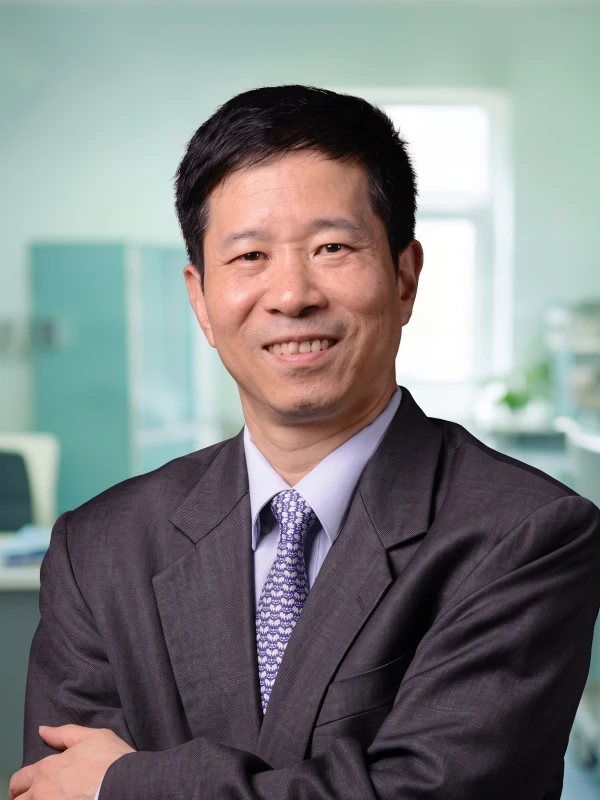
Dr. Liu Yizhi
nearly 200,00+
Cataract surgeries performed for patients
70+
Graduate students trained and supervised
20
Invention patents granted in countries worldwide
About Dr. Liu Yizhi
Dr. Liu Yizhi is academic leader of cataract surgery at the Zhongshan Ophthalmic Center, Sun Yat-sen University, and a former director of the centre. A chief scientist of China's 973 Programme and of a National Natural Science Foundation innovation group, he has focused his career on cataract surgery and the biology of the lens. His team's research on endogenous stem cell lens regeneration and lanosterol was published in Nature and recognised among the year's major medical advances. He has performed cataract surgery for nearly 200,000 patients and trained many leading ophthalmologists. He is a recipient of the State Council Special Allowance.
1、Academic leader of cataract surgery at the Zhongshan Ophthalmic Center
2、Former Director of the Zhongshan Ophthalmic Center and the Eye Hospital
3、Chief Scientist of China’s 973 Programme and of a National Natural Science Foundation innovation group
4、Co-author of landmark lens regeneration research published in Nature
5、Recipient of the State Council Special Allowance and Central Health Consultation Expert
6、Trainer of more than 70 postgraduate researchers, including national outstanding young scientists
Dr. Liu Yizhi ’s Three Key Areas of Expertise
Three areas of focused expertise, each supported by a deep subspecialty team, high case volumes and an English-speaking care pathway coordinated by Orisene.
Cataract surgery
He performs phacoemulsification and complex cataract surgery, including congenital, hard-nucleus and post-glaucoma cataracts, using refined techniques to restore vision safely and reduce complications for patients of all ages with careful, individualized attention to wound construction, postoperative recovery, healing and visual rehabilitation.
Lens regeneration research
He co-led research showing that endogenous stem cells can regenerate a functional lens, and that lanosterol can reverse protein aggregation in cataract, opening new directions for a potential non-surgical treatment of lens disease, work recognised as a major medical breakthrough.
Congenital and complex cataract
He manages congenital cataract and complex cases such as eyes with uveitis or prior glaucoma surgery, tailoring surgical timing and technique to protect visual development and achieve the best possible long-term visual outcome and function in children and adults over time.
More: intraocular lens selection——individualized choice; paediatric cataract——early surgery; refractive cataract surgery——precision; lens disease——research; ophthalmology training——education
Selected cases, research & publications
Representative work drawn from documented clinical treatments, publicly indexed literature, and hospital project records, reflecting the depth of this physician's hands-on expertise and academic rigor.
1. Functional Lens Regeneration Using Endogenous Stem Cells for Congenital Cataract (Nature, 2016)
This landmark clinical study led by Professor Liu Yizhi demonstrated functional human lens regeneration using the patient’s own lens epithelial stem cells. A minimally invasive cataract surgery preserving the capsule enabled transparent lens regrowth in infants with congenital cataract, reducing visual axis opacification. Keywords: lens regeneration, pediatric cataract, cataract surgery, endogenous stem cells, congenital cataract.
Related link: https://www.nature.com/articles/nature17181
2. Long-Term Pediatric Cataract Cohort Study: Surgery, Vision Recovery and Outcomes
Professor Liu Yizhi leads this large prospective pediatric cataract cohort at Zhongshan Ophthalmic Center, enrolling children under 18 with congenital, traumatic or complicated cataract. It evaluates cataract surgery timing, intraocular lens strategies, visual recovery and postoperative complications, supporting evidence-based pediatric cataract treatment. Patient search terms: pediatric cataract, congenital cataract, cataract surgery, intraocular lens, childhood blindness.
Related link: https://clinicaltrials.gov/study/NCT05472844
3. Intraocular Lens Power Calculation Accuracy in Silicone Oil-Filled Eyes After Cataract Surgery
This clinical case-series study from Zhongshan Ophthalmic Center compared new-generation and traditional intraocular lens calculation formulas in 211 eyes undergoing combined silicone oil removal and cataract surgery. New-generation formulas achieved higher refractive prediction accuracy, improving intraocular lens power selection and visual outcomes for complex vitrectomized patients. Keywords: cataract surgery, intraocular lens, phacoemulsification, IOL power calculation, silicone oil.
Related link: https://pubmed.ncbi.nlm.nih.gov/33278232/
4. In-the-Bag Versus Ciliary Sulcus Secondary Intraocular Lens Implantation for Pediatric Aphakia
This prospective comparative clinical study followed 202 children (355 aphakic eyes) after congenital cataract surgery. In-the-bag secondary intraocular lens implantation markedly reduced glaucoma-related complications and lens decentration and yielded better visual acuity than ciliary sulcus implantation, guiding pediatric cataract surgical practice. Search terms: pediatric cataract, intraocular lens, aphakia, cataract surgery, congenital cataract.
Related link: https://pubmed.ncbi.nlm.nih.gov/34653355/
5. Capsular Tension Ring Implantation for Intraocular Lens Stability in Highly Myopic Cataract Eyes (Randomized Clinical Trial)
This randomized clinical trial enrolled 186 highly myopic cataract patients undergoing phacoemulsification. Capsular tension ring implantation reduced intraocular lens decentration and tilt, improved prediction accuracy and visual quality, and increased patient satisfaction in eyes with axial length of 30 mm or longer. Keywords: cataract surgery, intraocular lens, capsular tension ring, high myopia, phacoemulsification.
Related link: https://pubmed.ncbi.nlm.nih.gov/38935400/
6. Impact of Cataract Surgery on Personal Income: The SUCCESS Randomized Controlled Trial
This randomized controlled trial in rural southern China examined whether cataract surgery raises personal income. Among 292 participants, early phacoemulsification with intraocular lens implantation significantly increased annual income compared with delayed surgery, demonstrating the socioeconomic benefit of cataract treatment. Search terms: cataract surgery, intraocular lens, phacoemulsification, visual impairment, cataract.
Related link: https://clinicaltrials.gov/study/NCT03020056
Where Dr. Liu Yizhi practices
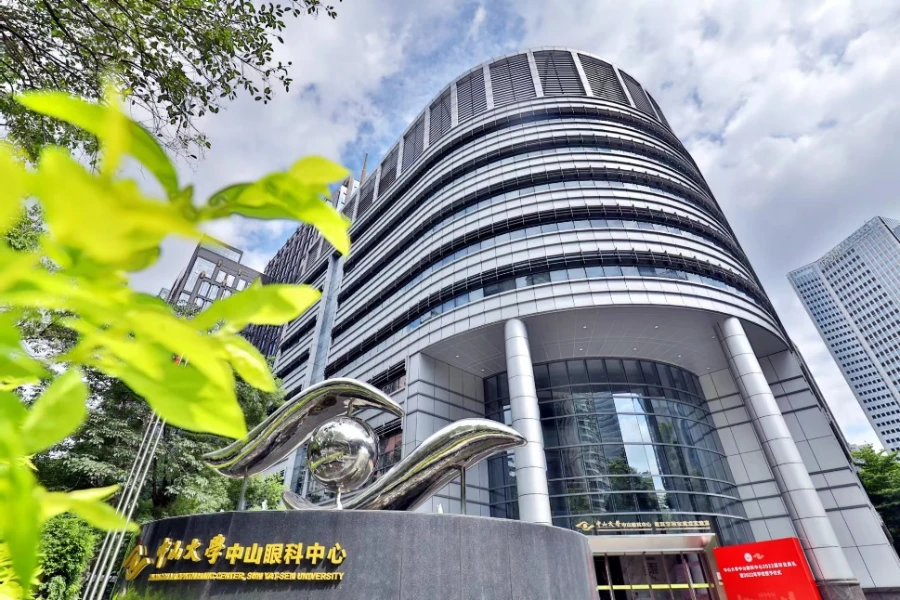
Zhongshan Ophthalmic Center, Sun Yat-sen University
Chinese name: 中山大学中山眼科中心
Zhongshan Ophthalmic Center, China's largest public eye hospital and the country's only WHO Collaborating Centre for Eye Health and Vision, performs 100,000+ surgeries a year with a 93.83% day-surgery rate and serves 1.4 million annual outpatient visits.
Since 1835
191 years of eye care
100,000+
Annual eye surgeries
1.4 million
Annual outpatient visits
93.83%
Annual eye surgeries
Appointments with this physician are booked through official hospital channels only, coordinated end-to-end by Orisene.
Why patients travel to China for treatment
Six reasons international patients now put China on their shortlist — from internationally aligned clinical capability to the policy channels that make treatment here genuinely reachable.
Clinical capability at international standard
Chinese hospitals deliver internationally aligned protocols, performing vast volumes of advanced robotic, minimally invasive, and complex transplant surgeries annually. This massive clinical data and highly specialized workforce ensure world-class outcomes, even for rare and complex cases.
Diagnostics and treatment in days, not months
A full medical workup that typically means months of waiting elsewhere is completed in China within 48–72 hours. Imaging, labs, and multidisciplinary consultations are integrated into a single visit, allowing treatment to commence immediately.
Transparent, itemised pricing
Chinese healthcare offers legally binding, itemised cost estimates before treatment begins, eliminating hidden fees or surprise billing. Due to national centralized procurement, total expenses remain 40–70% lower than comparable care in Western Europe or North America.
Policy channels that open the door
China facilitates access through 240-hour visa-free transit and dedicated medical visa routes. Policies like the Greater Bay Area drug pathway and Boao Lecheng’s pilot zone allow designated hospitals to administer innovative therapies not yet globally approved.
Consulting this physician, step by step
From the first message to the follow-up after you fly home, one coordinator, no paperwork on your side.
01
Day 0
- Share your storyA private consultation with an Orisene advisor, by message, phone or video. Send medical records in any language. Nothing is shared with the hospital yet.
02
Days 1–3
- Records review & matchingOrisene translates and presents your case to the right specialist. The hospital returns a tailored care plan, with costs itemised once that plan is confirmed.
03
Days 3–7
- Your consultationAppointments are booked through official hospital channels only. Your navigator accompanies every visit with real-time interpretation, so you can focus on one thing: being cared for.
04
After you fly home
- Reports & follow-upTranslated reports and prescriptions delivered within days, remote follow-up coordination with your physicians at home, and a standing line to your navigator.
Orisene offers English and multilingual services, a professional medical interpreter at every consultation, plus translation of your records, reports and prescriptions.
Ready to plan your consultation with Dr. Liu Yizhi?
Send your records in any language. An Orisene advisor will reply within 2 hours, present your case to the right specialist, and return a tailored care plan with itemised costs, before anything is booked. Simple. Private. Efficient.
Information Sources
This physician profile is compiled by the Orisene team from publicly available online sources and verified at the time of publication. Details may change, and physician availability is confirmed at the time of booking.
- Zhongshan Ophthalmic Center Official Expert Page: http://www.gzzoc.org.cn/node/3257
- Zhongshan Ophthalmic Center Expert Directory: http://www.gzzoc.org.cn/expert-introduction
Disclaimer: This information is for general educational purposes only and is not a substitute for professional medical advice, diagnosis, or treatment. Always consult a qualified healthcare provider for personal medical guidance.
Mention of any specific product, brand, or manufacturer is for informational purposes only and does not constitute an endorsement or recommendation by Dr. Liu Yizhi.