Private & confidential
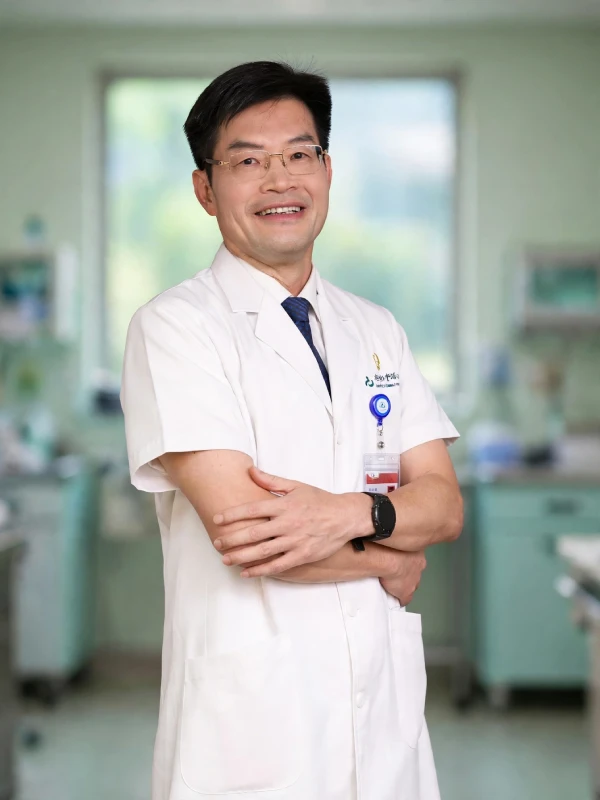
Dr. Wang Qian
Chinese name: 王前
Professor, Chief Physician, Doctoral Supervisor, Party Secretary . Laboratory Medicine
Professor Wang Qian is Party Secretary of Zhujiang Hospital of Southern Medical University and head of its laboratory medicine programme. A national teaching master, he focuses on precision diagnosis of cardiovascular disease, tumour markers and extracellular vesicle research, and has published nearly two hundred papers and trained more than one hundred and twenty postgraduate students.
Dr. Wang Qian
nearly 200
Research Papers Published
8
National Textbooks and Monographs Edited
5
Provincial and Ministerial Science and Technology Awards
About Dr. Wang Qian
Professor Wang Qian is Party Secretary of Zhujiang Hospital of Southern Medical University, academic leader of clinical laboratory diagnostics and head of the medical laboratory technology programme. He has devoted his career to laboratory medicine, with research interests in the molecular biology of rapid diagnostics, evidence-based laboratory medicine, precision diagnosis of cardiovascular disease and extracellular vesicles. He has led the discipline to become a national key clinical specialty and served as chairman of the Laboratory Medicine Branch of the Guangdong Medical Association. A national teaching master and Bethune-style good doctor, he has published nearly two hundred papers, edited eight national textbooks and won five provincial science and technology awards.
1、Party Secretary of Zhujiang Hospital of Southern Medical University
2、Academic leader of clinical laboratory diagnostics and head of the medical laboratory technology programme
3、Chairman of the Laboratory Medicine Branch of the Guangdong Medical Association
4、Recipient of the national teaching master, Guangdong medical leading talent and Bethune-style good doctor titles
5、Leader of a discipline recognised as a national key clinical specialty
6、Editor-in-chief of eight national textbooks and monographs
Dr. Wang Qian ’s Three Key Areas of Expertise
Three areas of focused expertise, each supported by a deep subspecialty team, high case volumes and an English-speaking care pathway coordinated by Orisene.
Cardiovascular molecular diagnosis
Professor Wang develops and applies molecular diagnostic tests for cardiovascular disease, including biomarkers and extracellular vesicle assays, to support early detection, risk assessment and monitoring of patients with atherosclerosis, myocardial infarction and other cardiovascular disorders in routine clinical laboratory practice.
Tumour marker testing
He leads the evaluation and clinical application of tumour markers and molecular assays for cancer screening and monitoring, integrating laboratory testing with clinical data to improve diagnostic accuracy and support personalised treatment decisions for patients with malignant disease in routine practice.
Extracellular vesicle research and testing
Professor Wang studies bacterial and human extracellular vesicles and translates this work into new diagnostic and therapeutic approaches, developing vesicle-based assays and technologies that aim to improve detection, prevention and treatment of infection, cardiovascular and inflammatory diseases in the laboratory.
More:rapid diagnostics——development; evidence-based laboratory medicine——practice; clinical microbiology——testing; laboratory quality management——systems; postgraduate training——education
Selected cases, research & publications
Representative work drawn from documented clinical treatments, publicly indexed literature, and hospital project records, reflecting the depth of this physician's hands-on expertise and academic rigor.
1. Bacterial Extracellular Vesicles in Atherosclerosis Initiation, Progression and Treatment
This review summarises how bacterial extracellular vesicles from the gut microbiota contribute to the initiation, progression and treatment of atherosclerosis. It highlights mechanisms linking microbial vesicles to endothelial injury and plaque formation, offering new perspectives for precision laboratory diagnosis and prevention of cardiovascular disease.
Related link: https://pubmed.ncbi.nlm.nih.gov/39840620/
2. Lactobacillus-Derived Extracellular Vesicles Containing MDP Inhibit HSV-2 Infection
This study showed that extracellular vesicles carrying muramyl dipeptide, released from Lactobacillus rhamnosus GG, can inhibit herpes simplex virus type 2 infection by activating host innate immunity. The work suggests probiotic-derived vesicles as a novel, safe treatment approach for viral sexually transmitted infections.
Related link: https://pubmed.ncbi.nlm.nih.gov/40825575/
3. HCC-1 as an Early Diagnostic Biomarker of Atherosclerosis
This study reported that HCC-1 accelerates atherosclerosis by inducing endothelial cell and macrophage pyroptosis, and can serve as an early diagnostic biomarker. By measuring circulating HCC-1, clinicians could detect atherosclerotic cardiovascular disease earlier and identify patients at risk of plaque progression.
Related link: https://pubmed.ncbi.nlm.nih.gov/39087347/
4. UGP2, a TP53 Target, Protects Endothelial Cells Against Atherosclerosis
This molecular study identified UGP2 as a novel target gene of TP53 that inhibits endothelial cell apoptosis and slows atherosclerosis. The results clarify a protective mechanism in vascular endothelium and point to UGP2 as a potential therapeutic target for treating and preventing atherosclerotic cardiovascular disease.
Related link: https://pubmed.ncbi.nlm.nih.gov/39818283/
5. Single-Particle Analysis of Circulating Bacterial Extracellular Vesicles
This study used single-particle analysis to characterise circulating bacterial extracellular vesicles, revealing their biogenesis, dynamic changes in blood and links to intestinal barrier function. The work advances liquid-biopsy laboratory techniques for detecting gut-derived vesicles and their relevance to cardiovascular and metabolic disease.
Related link: https://pubmed.ncbi.nlm.nih.gov/38050834/
6. Maternal Group B Streptococcus and Early-Life Infant Microbiome
This study found that maternal group B Streptococcus colonisation is associated with decreased infant length and altered early-life microbiome development in newborns. It supports laboratory screening and perinatal management of group B Streptococcus to protect newborn growth and long-term child health and development.
Related link: https://pubmed.ncbi.nlm.nih.gov/39693119/
Where Dr. Wang Qian practices
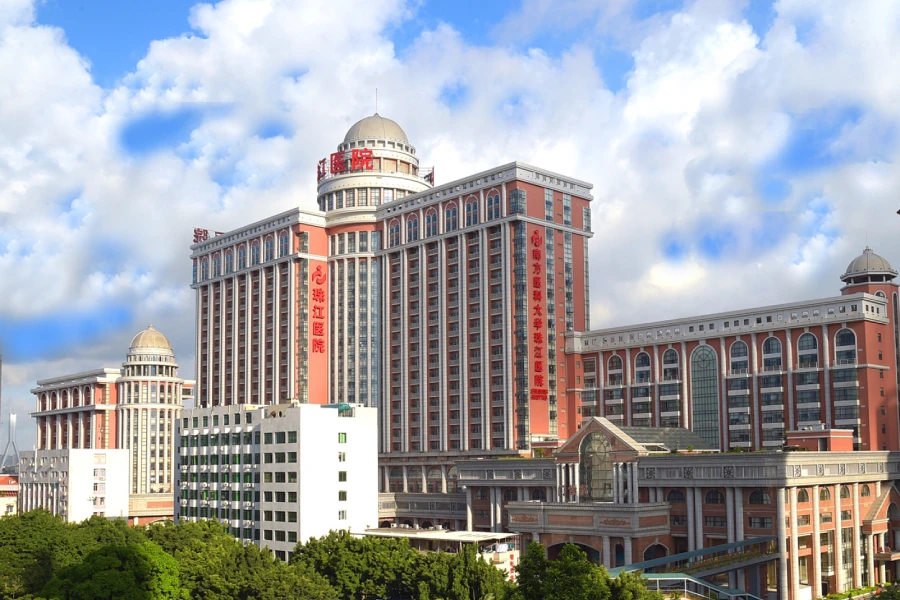
Zhujiang Hospital of Southern Medical University
Chinese name: 南方医科大学珠江医院
Zhujiang Hospital of Southern Medical University, born in 1947 as a military field hospital and among the nation's first Grade-A tertiary hospitals, operates 3,500 beds across two campuses, holding 5 national key specialties and leading South China in neurosurgery, pediatric critical care and organ transplantation.
Since 1947
79 years of care
3,500
Licensed beds
65
Clinical departments
5
Licensed beds
Appointments with this physician are booked through official hospital channels only, coordinated end-to-end by Orisene.
Why patients travel to China for treatment
Six reasons international patients now put China on their shortlist — from internationally aligned clinical capability to the policy channels that make treatment here genuinely reachable.
Clinical capability at international standard
Chinese hospitals deliver internationally aligned protocols, performing vast volumes of advanced robotic, minimally invasive, and complex transplant surgeries annually. This massive clinical data and highly specialized workforce ensure world-class outcomes, even for rare and complex cases.
Diagnostics and treatment in days, not months
A full medical workup that typically means months of waiting elsewhere is completed in China within 48–72 hours. Imaging, labs, and multidisciplinary consultations are integrated into a single visit, allowing treatment to commence immediately.
Transparent, itemised pricing
Chinese healthcare offers legally binding, itemised cost estimates before treatment begins, eliminating hidden fees or surprise billing. Due to national centralized procurement, total expenses remain 40–70% lower than comparable care in Western Europe or North America.
Policy channels that open the door
China facilitates access through 240-hour visa-free transit and dedicated medical visa routes. Policies like the Greater Bay Area drug pathway and Boao Lecheng’s pilot zone allow designated hospitals to administer innovative therapies not yet globally approved.
Consulting this physician, step by step
From the first message to the follow-up after you fly home, one coordinator, no paperwork on your side.
01
Day 0
- Share your storyA private consultation with an Orisene advisor, by message, phone or video. Send medical records in any language. Nothing is shared with the hospital yet.
02
Days 1–3
- Records review & matchingOrisene translates and presents your case to the right specialist. The hospital returns a tailored care plan, with costs itemised once that plan is confirmed.
03
Days 3–7
- Your consultationAppointments are booked through official hospital channels only. Your navigator accompanies every visit with real-time interpretation, so you can focus on one thing: being cared for.
04
After you fly home
- Reports & follow-upTranslated reports and prescriptions delivered within days, remote follow-up coordination with your physicians at home, and a standing line to your navigator.
Orisene offers English and multilingual services, a professional medical interpreter at every consultation, plus translation of your records, reports and prescriptions.
Ready to plan your consultation with Dr. Wang Qian?
Send your records in any language. An Orisene advisor will reply within 2 hours, present your case to the right specialist, and return a tailored care plan with itemised costs, before anything is booked. Simple. Private. Efficient.
Information Sources
This physician profile is compiled by the Orisene team from publicly available online sources and verified at the time of publication. Details may change, and physician availability is confirmed at the time of booking.
- Southern Medical University Official Faculty Profile: https://news.smu.edu.cn/info/1024/53386.htm
- PubMed Author Records (extracellular vesicles and molecular diagnostics): https://pubmed.ncbi.nlm.nih.gov/39840620/
Disclaimer: This information is for general educational purposes only and is not a substitute for professional medical advice, diagnosis, or treatment. Always consult a qualified healthcare provider for personal medical guidance.
Mention of any specific product, brand, or manufacturer is for informational purposes only and does not constitute an endorsement or recommendation by Dr. Wang Qian.