Private & confidential
Dr. Xu Anding
Chinese name: 徐安定
Professor and Chief Physician . Neurology
Professor Xu Anding is a senior neurologist and chief physician at the First Affiliated Hospital of Jinan University, where he serves as dean of the Brain Hospital and director of the Clinical Neuroscience Institute. He specializes in cerebrovascular disease and acute ischemic stroke, leading one of China's foremost stroke treatment and prevention programs.
over 30
Years of clinical practice
nearly 300
Peer-reviewed publications
under 25 minutes
Door-to-needle time for thrombolysis
About Dr. Xu Anding
Xu Anding, Professor and Chief Physician of Neurology, is dean of the Brain Hospital and director of the Clinical Neuroscience Institute at the First Affiliated Hospital of Jinan University, and a former president of the hospital. A pioneer of stroke care in South China, he built the neurology department from a small unit into a national key clinical specialty. His research focuses on acute ischemic stroke, intravenous thrombolysis, and secondary prevention, and he has served as lead author of Chinese cerebrovascular disease management guidelines. He has published nearly 300 papers and received multiple provincial science and technology awards.
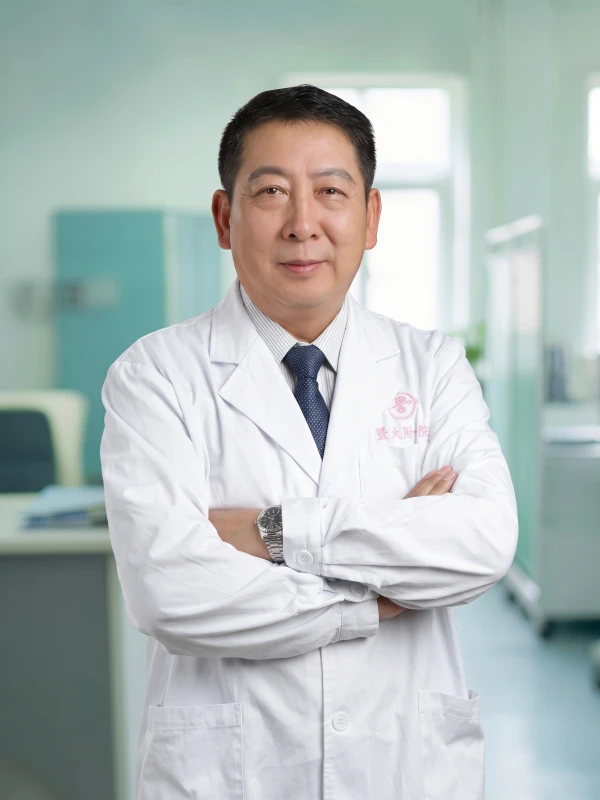
- Professor and Chief Physician of Neurology, and dean of the Brain Hospital at the First Affiliated Hospital of Jinan University.
- Former president and vice president of the First Affiliated Hospital of Jinan University, and director of its Department of Neurology.
- Vice president of the Chinese Stroke Association and president of the Guangdong Stroke Association.
- Deputy editor of Stroke & Vascular Neurology, and member of the National Health Commission expert panel on neurological disease quality control.
- Lead author of the Chinese Guideline for the Management of Cerebrovascular Diseases (2019 and 2023 editions).
- Author of nearly 300 papers and recipient of the Guangdong Provincial Science and Technology Award and the China Stroke Award.
Dr. Xu Anding ’s Three Key Areas of Expertise
Three areas of focused expertise, each supported by a deep subspecialty team, high case volumes and an English-speaking care pathway coordinated by Orisene.
Acute Ischemic Stroke
Professor Xu specializes in the emergency management of acute ischemic stroke, including intravenous thrombolysis and endovascular reperfusion. He has helped build a regional stroke network that shortens door-to-needle time and improves functional recovery for patients presenting within the treatment window.
Cerebrovascular Disease Prevention
He focuses on primary and secondary prevention of cerebrovascular disease, managing hypertension, dyslipidemia, diabetes, and other vascular risk factors. His guideline work helps standardize antiplatelet, lipid-lowering, and lifestyle strategies to reduce recurrent stroke and long-term disability in high-risk patients across China.
Transient Ischemic Attack
Professor Xu provides rapid evaluation and risk stratification for transient ischemic attack and minor stroke, a group at high early recurrence risk. He advances early dual antiplatelet and statin strategies, structured follow-up, and patient education to prevent progression to disabling stroke.
More:Cerebral atherosclerosis——diagnosis and medical management; Stroke center construction——standardized acute care pathways; Neurocritical care——management of severe stroke; Post-stroke rehabilitation——functional recovery; Carotid artery disease——risk assessment and treatment planning
Selected cases, research & publications
Representative work drawn from documented clinical treatments, publicly indexed literature, and hospital project records, reflecting the depth of this physician's hands-on expertise and academic rigor.
1. Liraglutide in Acute Minor Ischemic Stroke or High-Risk TIA With Type 2 Diabetes (LAMP Trial)
The LAMP randomized clinical trial enrolled 636 patients with type 2 diabetes after minor ischemic stroke or high-risk TIA across 27 centers in China. Adding liraglutide to standard secondary prevention lowered the 90-day stroke recurrence rate from 13.8% to 7.9% and improved functional outcomes, supporting a new strategy for this high-risk population.
2. Hospital Process Reengineering to Shorten Door-to-Needle Time (PROMISE-CHINA)
This multicenter, prospective pre-post study evaluated how reengineering hospital workflows affects door-to-needle time for intravenous thrombolysis in acute ischemic stroke across Chinese stroke centers. By streamlining the emergency-to-neurology pathway, the program substantially reduced treatment delays, demonstrating that structured process improvement can accelerate reperfusion therapy nationwide.
Related link: https://www.frontiersin.org/journals/neurology/articles/10.3389/fneur.2026.1746553/full
3. Intensive Statin Plus Intravenous rt-PA in Acute Ischemic Stroke (INSPIRE Trial)
The INSPIRE randomized clinical trial randomly assigned 310 acute ischemic stroke patients treated with intravenous rt-PA to intensive or low-dose rosuvastatin. It found that early intensive statin therapy did not significantly improve three-month functional outcomes compared with standard dosing, while both regimens showed a similar safety profile, informing acute-phase lipid management.
Related link: https://pubmed.ncbi.nlm.nih.gov/33555418/
4. CircOGDH as a Penumbra Biomarker and Therapeutic Target
Researchers identified the circular RNA CircOGDH as a blood biomarker of the ischemic penumbra in acute ischemic stroke. In patient samples and animal models, CircOGDH levels reflected salvageable brain tissue, and silencing it reduced neuronal apoptosis, suggesting a dual role as a diagnostic marker and a therapeutic target for reperfusion.
Related link: https://pubmed.ncbi.nlm.nih.gov/35189704/
5. Nanoparticle Delivery of CircOGDH siRNA to the Ischemic Penumbra
This translational study developed PLGA-PAMAM nanoparticles loaded with CircOGDH siRNA and delivered them to the ischemic penumbra in mouse models of focal brain ischemia. The treatment alleviated neuronal apoptosis and improved neurological deficits without evident toxicity, offering a promising circRNA-based nanotherapeutic approach for acute ischemic stroke.
Related link: https://pubmed.ncbi.nlm.nih.gov/37328278/
6. Implementing the Stroke 1-2-0 Awareness Program in China
Stroke 1-2-0 is a Chinese stroke awareness mnemonic that links facial drooping, arm weakness, and unclear speech to the emergency number 120. A nationwide implementation study showed sharp rises in public acceptance and awareness of the thrombolysis time window, with more than 1,000 hospitals joining the campaign to reduce prehospital delays.
Related link: https://svn.bmj.com/content/5/4/374
Where Dr. Xu Anding practices

The First Affiliated Hospital of Jinan University(Guangzhou Overseas Chinese Hospital)
Chinese name: 暨南大学附属第一医院(广州华侨医院)
The First Affiliated Hospital of Jinan University, Guangzhou Overseas Chinese Hospital, founded in 1978, is a Grade-A tertiary university hospital and Guangdong high-level hospital, one of the province's first internet hospitals, with cerebrovascular, joint-sports and bariatric centers serving 80,000 annual discharges.
Since 1981
45 years of care
1,969
Licensed beds
73,000
Annual inpatient surgeries
Yes
Licensed beds
Appointments with this physician are booked through official hospital channels only, coordinated end-to-end by Orisene.
Why patients travel to China for treatment
Six reasons international patients now put China on their shortlist — from internationally aligned clinical capability to the policy channels that make treatment here genuinely reachable.
Clinical capability at international standard
Chinese hospitals deliver internationally aligned protocols, performing vast volumes of advanced robotic, minimally invasive, and complex transplant surgeries annually. This massive clinical data and highly specialized workforce ensure world-class outcomes, even for rare and complex cases.
Diagnostics and treatment in days, not months
A full medical workup that typically means months of waiting elsewhere is completed in China within 48–72 hours. Imaging, labs, and multidisciplinary consultations are integrated into a single visit, allowing treatment to commence immediately.
Transparent, itemised pricing
Chinese healthcare offers legally binding, itemised cost estimates before treatment begins, eliminating hidden fees or surprise billing. Due to national centralized procurement, total expenses remain 40–70% lower than comparable care in Western Europe or North America.
Policy channels that open the door
China facilitates access through 240-hour visa-free transit and dedicated medical visa routes. Policies like the Greater Bay Area drug pathway and Boao Lecheng’s pilot zone allow designated hospitals to administer innovative therapies not yet globally approved.
Consulting this physician, step by step
From the first message to the follow-up after you fly home, one coordinator, no paperwork on your side.
01
Day 0
- Share your storyA private consultation with an Orisene advisor, by message, phone or video. Send medical records in any language. Nothing is shared with the hospital yet.
02
Days 1–3
- Records review & matchingOrisene translates and presents your case to the right specialist. The hospital returns a tailored care plan, with costs itemised once that plan is confirmed.
03
Days 3–7
- Your consultationAppointments are booked through official hospital channels only. Your navigator accompanies every visit with real-time interpretation, so you can focus on one thing: being cared for.
04
After you fly home
- Reports & follow-upTranslated reports and prescriptions delivered within days, remote follow-up coordination with your physicians at home, and a standing line to your navigator.
Orisene offers English and multilingual services, a professional medical interpreter at every consultation, plus translation of your records, reports and prescriptions.
Ready to plan your consultation with Dr. Xu Anding?
Send your records in any language. An Orisene advisor will reply within 2 hours, present your case to the right specialist, and return a tailored care plan with itemised costs, before anything is booked. Simple. Private. Efficient.
Information Sources
This physician profile is compiled by the Orisene team from publicly available online sources and verified at the time of publication. Details may change, and physician availability is confirmed at the time of booking.
- First Affiliated Hospital of Jinan University (Guangzhou Overseas Chinese Hospital), expert feature on Professor Xu Anding: https://www.jd120.com/Info-14300.html
- Jinan University news release on the LAMP randomized clinical trial: https://english.jnu.edu.cn/2026/0318/c2027a851934/page.htm
- PubMed record of the INSPIRE randomized clinical trial: https://pubmed.ncbi.nlm.nih.gov/33555418/
- Stroke and Vascular Neurology, implementing the Stroke 1-2-0 program in China: https://svn.bmj.com/content/5/4/374
Disclaimer: This information is for general educational purposes only and is not a substitute for professional medical advice, diagnosis, or treatment. Always consult a qualified healthcare provider for personal medical guidance.
Mention of any specific product, brand, or manufacturer is for informational purposes only and does not constitute an endorsement or recommendation by Dr. Xu Anding.