Private & confidential
Dr. Yang Hui
Chinese name: 杨晖
Chief Physician, Doctoral Supervisor . Neuro-Ophthalmology
Dr. Yang Hui is a Chief Physician and Doctoral Supervisor at Zhongshan Ophthalmic Center, Sun Yat-sen University. With more than 20 years of clinical and research experience in neuro-ophthalmology and the medical retina, he specializes in the diagnosis and treatment of optic neuritis, ischemic optic neuropathy, refractory optic atrophy, radiation optic neuropathy, ocular motor disorders and blepharospasm.
20+ years
Neuro-ophthalmology clinical and research experience
21
First/corresponding-author SCI publications
3+
National and provincial research projects led
About Dr. Yang Hui
Dr. Yang Hui is a Chief Physician and Doctoral Supervisor at Zhongshan Ophthalmic Center, Sun Yat-sen University, where he has devoted more than 20 years to neuro-ophthalmology and the medical retina. He specialises in the diagnosis and treatment of optic neuritis, ischaemic and radiation optic neuropathy, refractory optic atrophy, ocular motor disorders and blepharospasm, with particular experience in optic neuritis associated with neuromyelitis optica spectrum disorders. His published research spans experimental models and prospective clinical studies of optic neuritis, and he serves in national and international neuro-ophthalmology committees on optic nerve disease.

1、Chief Physician and Doctoral Supervisor at Zhongshan Ophthalmic Center, Sun Yat-sen University
2、More than 20 years of clinical and research experience in neuro-ophthalmology and the medical retina
3、Specialises in optic neuritis, ischaemic and radiation optic neuropathy, refractory optic atrophy, ocular motor disorders and blepharospasm
4、Corresponding and co-author of PubMed-indexed studies on optic neuritis and NMOSD-related optic neuropathy
5、Member of the Chinese Medical Association Neuro-ophthalmology Group and the Asia-Pacific and the North American Neuro-Ophthalmology societies, and of the Cross-strait Optic Neuritis Group
Dr. Yang Hui ’s Three Key Areas of Expertise
Three areas of focused expertise, each supported by a deep subspecialty team, high case volumes and an English-speaking care pathway coordinated by Orisene.
Optic neuritis
He diagnoses and treats optic neuritis, including cases associated with neuromyelitis optica spectrum disorders, using detailed clinical assessment, targeted immunotherapy and careful monitoring to protect the optic nerve, reduce the risk of relapse and restore as much vision as possible over time.
Ischaemic and radiation optic neuropathy
He manages non-arteritic anterior ischaemic optic neuropathy and radiation-induced optic neuropathy in patients treated for head and neck tumours, focusing on early recognition, risk-factor control, supportive care and rehabilitation, and coordinates imaging, electrophysiology and cardiovascular risk assessment to guide individualised treatment.
Refractory optic atrophy and neuro-ophthalmic disorders
He evaluates complex optic nerve atrophy, ocular motor disorders and blepharospasm by integrating neuroimaging, visual field testing and electrophysiology, helping to clarify the underlying aetiology, guide individualised clinical management, monitor disease progression over time and preserve whatever visual function remains.
More: neuro-ophthalmology——comprehensive assessment; macular disease——medical retina; neuro-ophthalmic imaging——diagnosis; visual electrophysiology——testing; optic neuritis research——NMOSD
Selected cases, research & publications
Representative work drawn from documented clinical treatments, publicly indexed literature, and hospital project records, reflecting the depth of this physician's hands-on expertise and academic rigor.
1. Intravenous Cyclophosphamide Rescue Therapy for Corticosteroid-Refractory Neuromyelitis Optica Spectrum Disorder-Related Optic Neuritis
This clinical study from Zhongshan Ophthalmic Center showed that intravenous cyclophosphamide given within 30 days of attack onset safely improved visual acuity, visual field and visual evoked potential amplitude in neuromyelitis optica spectrum disorder-related optic neuritis (NMOSD-ON) patients refractory to high-dose methylprednisolone, offering an effective acute treatment option for severe optic neuritis in neuromyelitis optica.
2. Therapeutic Effects of Idebenone in Leber Hereditary Optic Neuropathy
This case-controlled study evaluated oral idebenone (900 mg per day) in 30 patients with Leber hereditary optic neuropathy (LHON) carrying the m.3460G>A, m.11778G>A and m.14484T>C mutations. Idebenone was safe and improved best-corrected visual acuity, visual field mean defect and visual evoked potential amplitude, supporting neuroprotective treatment for this inherited optic neuropathy.
Related link: https://pubmed.ncbi.nlm.nih.gov/32111141
3. Comparing Visual Field Defect Evolution in Neuromyelitis Optica Spectrum Disorder-Optic Neuritis and Idiopathic Optic Neuritis
This prospective study of 104 optic neuritis patients followed at least six months found that neuromyelitis optica spectrum disorder-optic neuritis (NMOSD-ON) causes more severe visual field damage and worse recovery than idiopathic optic neuritis (IDON). Early visual field patterns help clinicians predict prognosis and guide treatment decisions in neuro-ophthalmology.
4. Different Visual Evoked Potentials in NMOSD-Optic Neuritis and Idiopathic Demyelinating Optic Neuritis
This prospective longitudinal study compared visual evoked potentials (VEP) in neuromyelitis optica spectrum disorder-optic neuritis (NMOSD-ON) and idiopathic demyelinating optic neuritis. Distinct VEP patterns helped differentiate these two optic neuritis subtypes, supporting accurate diagnosis and tailored immunosuppressive treatment for patients with neuromyelitis optica and demyelinating optic neuritis.
Related link: https://pubmed.ncbi.nlm.nih.gov/36131262
5. Deep Learning System for Distinguishing Optic Neuritis from Non-Arteritic Anterior Ischemic Optic Neuropathy
Researchers developed a deep learning system using fundus photographs to distinguish acute optic neuritis from non-arteritic anterior ischemic optic neuropathy (NAION). In 871 eyes the model achieved an AUC of 0.902, helping clinicians rapidly differentiate inflammatory optic neuritis from ischemic optic neuropathy and choose appropriate steroid or neuroprotective treatment.
6. Obstructive Sleep Apnea and Subclinical Contralateral Optic Nerve Damage in Unilateral NAION
This study of 50 unilateral non-arteritic anterior ischemic optic neuropathy (NAION) patients showed that moderate-to-severe obstructive sleep apnea syndrome (OSAS) caused subclinical temporal retinal nerve fiber layer thinning in the unaffected eye. The findings support screening and treating sleep apnea to protect the fellow eye in ischemic optic neuropathy.
Related link: https://pubmed.ncbi.nlm.nih.gov/36305585
Where Dr. Yang Hui practices
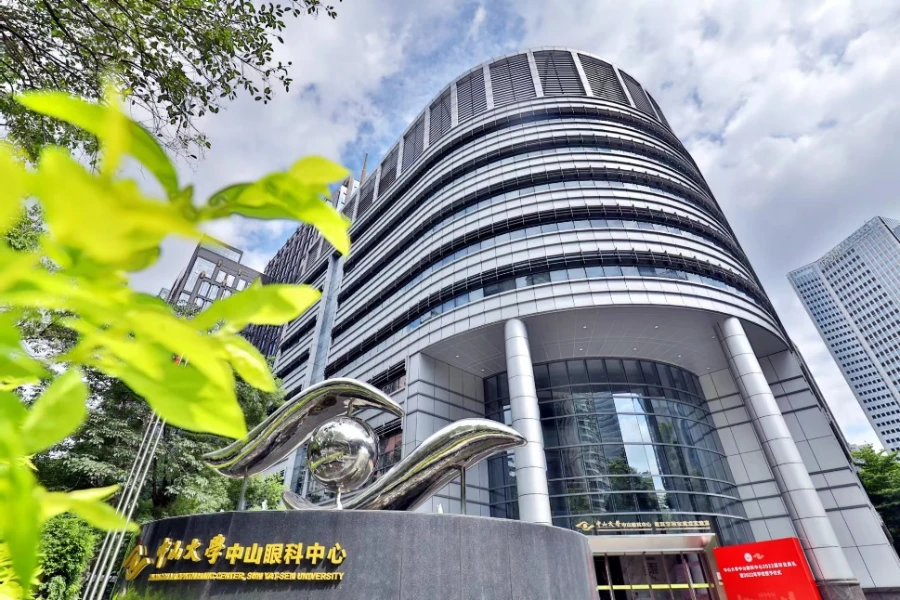
Zhongshan Ophthalmic Center, Sun Yat-sen University
Chinese name: 中山大学中山眼科中心
Zhongshan Ophthalmic Center, China's largest public eye hospital and the country's only WHO Collaborating Centre for Eye Health and Vision, performs 100,000+ surgeries a year with a 93.83% day-surgery rate and serves 1.4 million annual outpatient visits.
Since 1835
191 years of eye care
100,000+
Annual eye surgeries
1.4 million
Annual outpatient visits
93.83%
Annual eye surgeries
Appointments with this physician are booked through official hospital channels only, coordinated end-to-end by Orisene.
Why patients travel to China for treatment
Six reasons international patients now put China on their shortlist — from internationally aligned clinical capability to the policy channels that make treatment here genuinely reachable.
Clinical capability at international standard
Chinese hospitals deliver internationally aligned protocols, performing vast volumes of advanced robotic, minimally invasive, and complex transplant surgeries annually. This massive clinical data and highly specialized workforce ensure world-class outcomes, even for rare and complex cases.
Diagnostics and treatment in days, not months
A full medical workup that typically means months of waiting elsewhere is completed in China within 48–72 hours. Imaging, labs, and multidisciplinary consultations are integrated into a single visit, allowing treatment to commence immediately.
Transparent, itemised pricing
Chinese healthcare offers legally binding, itemised cost estimates before treatment begins, eliminating hidden fees or surprise billing. Due to national centralized procurement, total expenses remain 40–70% lower than comparable care in Western Europe or North America.
Policy channels that open the door
China facilitates access through 240-hour visa-free transit and dedicated medical visa routes. Policies like the Greater Bay Area drug pathway and Boao Lecheng’s pilot zone allow designated hospitals to administer innovative therapies not yet globally approved.
Consulting this physician, step by step
From the first message to the follow-up after you fly home, one coordinator, no paperwork on your side.
01
Day 0
- Share your storyA private consultation with an Orisene advisor, by message, phone or video. Send medical records in any language. Nothing is shared with the hospital yet.
02
Days 1–3
- Records review & matchingOrisene translates and presents your case to the right specialist. The hospital returns a tailored care plan, with costs itemised once that plan is confirmed.
03
Days 3–7
- Your consultationAppointments are booked through official hospital channels only. Your navigator accompanies every visit with real-time interpretation, so you can focus on one thing: being cared for.
04
After you fly home
- Reports & follow-upTranslated reports and prescriptions delivered within days, remote follow-up coordination with your physicians at home, and a standing line to your navigator.
Orisene offers English and multilingual services, a professional medical interpreter at every consultation, plus translation of your records, reports and prescriptions.
Ready to plan your consultation with Dr. Yang Hui?
Send your records in any language. An Orisene advisor will reply within 2 hours, present your case to the right specialist, and return a tailored care plan with itemised costs, before anything is booked. Simple. Private. Efficient.
Information Sources
This physician profile is compiled by the Orisene team from publicly available online sources and verified at the time of publication. Details may change, and physician availability is confirmed at the time of booking.
- Zhongshan Ophthalmic Center Official Expert Page: http://www.gzzoc.org.cn/node/3137
- PubMed (corresponding-author profile): https://pubmed.ncbi.nlm.nih.gov/29913164/
Disclaimer: This information is for general educational purposes only and is not a substitute for professional medical advice, diagnosis, or treatment. Always consult a qualified healthcare provider for personal medical guidance.
Mention of any specific product, brand, or manufacturer is for informational purposes only and does not constitute an endorsement or recommendation by Dr. Yang Hui.