China’s leading hospitals move fast. Your first 48 hours on the ground should not. This checklist covers the practical side of a medical trip — documents, money, connectivity, transport, accommodation and how a hospital visit actually runs — so nothing important is left to discover on arrival.
By the Orisene Health Patient Navigation Team · Reviewed for accuracy · Last updated: October 2026 · 11 min read
Orisene Health is an independent medical concierge and patient navigation service. We are not a hospital or a clinic, and we are not affiliated with any hospital or pharmaceutical company.
If you have decided to come to China for medical care, the clinical part is usually the part you have already thought hardest about. What catches first-time visitors out is everything around it: a phone that cannot receive a verification code, a card that gets declined at a payment counter, a hotel that cannot check in a foreign passport, a hospital appointment that works on a different logic than the one you are used to.
None of these problems are difficult. They are simply invisible until you meet them. This guide lays them out in the order you will meet them — roughly sixty days before departure through the first morning in China — so you can tick them off and get on with the reason you are travelling.
How to use this guide
Skim the timeline table at the end first if you are short on time. Everything else is detail behind those deadlines. Where a rule, fee or country list is mentioned, treat it as a snapshot: policies in this area change, and the official source always wins.
Table of Contents
1. Before you book the flight
—— 60 to 30 days out
1.1 Passport and visa
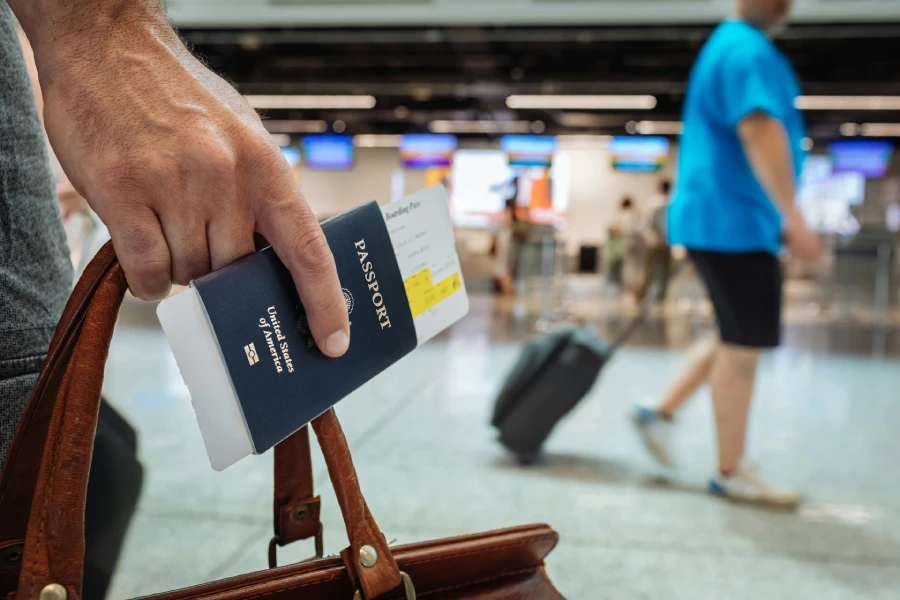
Start with the document itself. Your passport should have at least six months of validity remaining beyond your planned departure date and two blank visa pages. Renewing a passport late is the single most common cause of a cancelled medical trip.
China does not have a dedicated “medical visa” category. Travellers coming for care normally enter under an existing category, and which one fits depends on how long you plan to stay and how formal the arrangement is:
- L (tourist) — the usual route for short, predictable visits such as a consultation, a screening programme or a single outpatient appointment.
- S2 (short-term private affairs) — commonly used when a planned course of care runs longer, or when a hospital invitation letter is part of the application. Stays up to 180 days.
- F (exchange and visits) or M (business) — occasionally used when the visit is structured through an institution or involves commercial arrangements.
- S1 (long-term private affairs) — only for stays beyond 180 days; requires conversion to a residence permit after arrival.
Whichever route applies, a hospital invitation or appointment letter is worth having even when it is not strictly required. It should carry your name exactly as printed in your passport, your passport number, the hospital’s full contact details, the planned dates of the visit, and the hospital’s official stamp. Large Grade 3A hospitals with international patient offices issue these routinely, and a medical concierge can request one on your behalf.
Visa-free routes — check before you rely on them
China has expanded visa-free entry considerably. Two routes matter for medical travellers, and both come with conditions:
240-hour visa-free transit — available to citizens of 57 countries (the list was expanded again in August 2026) at 65 ports across 24 provincial-level regions. You must hold an onward ticket to a third country or region with a confirmed date within 240 hours, and the permitted activities are tourism, business, visiting family and similar — formal medical treatment is not among them.
Hainan 30-day visa-free entry — open to citizens of 61 countries, but the stay is confined to Hainan Province. This is relevant if your care is planned at Boao Lecheng, and irrelevant if it is not.
Separate unilateral visa-free arrangements cover many other nationalities for up to 30 days. Every one of these lists is revised periodically, and none of them should be assumed to cover treatment. Verify your nationality’s current status with the Chinese embassy or consulate serving you, or with the National Immigration Administration, before you plan around it.
View: China’s 240-Hour Visa-Free Transit: A Practical Guide for Medical Travellers
1.2 Medical paperwork to carry
Bring records as physical objects, not as something you assume you can fetch later. Cloud access is not guaranteed once you land.
- A written medical summary in English — diagnoses, relevant history, current medication, allergies, previous surgery.
- Imaging in its original format. Chinese hospitals generally want the DICOM files, not a photograph of a printed film. Bring the CD or USB and keep a cloud copy as backup.
- A medication list using generic names. Brand names differ from country to country; the generic name is what a Chinese pharmacist will recognise.
- Insurance documentation — policy number, international emergency hotline, and the insurer’s claim requirements.
- If you are seeking a second opinion, write down three to five specific questions beforehand. A short, precise list gets better answers than an open conversation.
1.3 Insurance and how payment works
Set expectations early: most hospitals in mainland China do not bill overseas insurers directly. The normal pattern is that you pay at the point of service and claim reimbursement after you return home. Before you travel, ask your insurer three things — whether pre-authorisation is needed, which documents the claim requires (often an English diagnosis certificate and an itemised bill), and whether they have any direct-settlement partners in China. A small number of institutions, including several in the Boao Lecheng pilot zone, have arrangements for international insurance settlement.
Then keep everything: every receipt, every itemised bill, every official invoice (fapiao), and every written diagnosis. Photograph them as you go.
1.4 Timing and buffer days
Build slack into the itinerary. Laboratory work and imaging reports often take several days, and a specialist may want to see you again with results in hand. Booking a return flight for the day after your first appointment is the mistake that costs people the most.
Also weigh the calendar: typhoon season in South China runs roughly from May to November and can disrupt flights, and national public holidays shift hospital scheduling. Two to three spare days is cheap insurance compared with rebooking an international ticket.
1.5 Bringing a companion
One accompanying person makes an enormous difference — for translation, for logistics, and simply for the hours spent waiting. Apply for their visa, insurance and accommodation at the same time as your own; doing it separately later means two sets of paperwork and two chances to miss something.
2. Money: how to pay in China
—— 14 days out
2.1 Mobile payment is the default
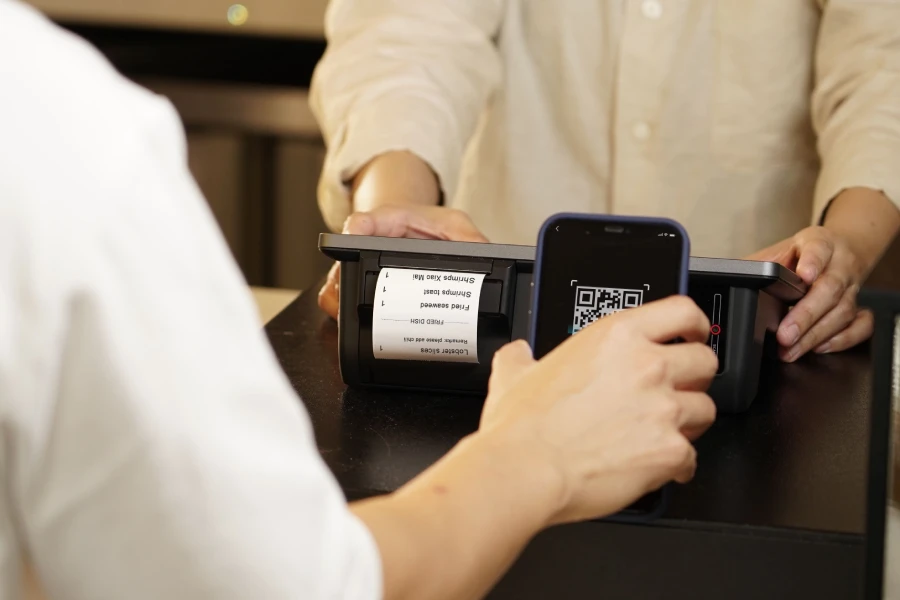
China runs on Alipay and WeChat Pay. Card terminals exist but are patchy outside large hotels, airports and international retail. Set up at least one of these apps before you fly — registration requires phone and identity verification, and doing it jet-lagged in an airport queue is an avoidable form of misery.
Both accept international cards (Visa, Mastercard, JCB, Diners and others). Two practical notes: some issuing banks decline the binding request because they cannot read the authorisation message — call your bank beforehand if it fails; and make one small test transaction while you are still at home.
2.2 Cards, cash and the numbers worth knowing
| Item | What to expect |
|---|---|
| Service fee on foreign cards | Transactions of CNY 200 or less are typically free of platform service fee; above CNY 200 a service fee of around 3% applies. Your own bank may add a foreign transaction fee. |
| Spending limits | Official guidance sets foreign-card spending through these platforms at roughly USD 5,000 per transaction and USD 50,000 per year. Individual platforms apply their own additional caps — check inside the app. |
| Physical cards | Reliable at international hotels, airports and large malls. Not reliable at small shops, street taxis or many hospital counters. |
| ATM withdrawal | Possible with international cards at machines carrying the matching network logo. Slow, but a useful fallback. |
| Cash limits | RMB notes are capped at CNY 20,000 per person per entry or exit. Foreign currency cash above USD 5,000 equivalent must be declared to customs on arrival. |
Carry a modest amount of cash anyway — small vendors, a taxi driver whose app has frozen, a refundable deposit. Carry at least two cards on different networks, kept in separate places.
Worth knowing
An official one-stop arrivals app, Nihao China, is available for overseas visitors and combines foreign-card top-up, transit QR codes in dozens of cities and departure tax refund handling. Availability and features change; download it from an official channel and check what it currently supports.
2.3 Paying at the hospital — and why the Chinese way has its advantages
The difference in one sentence: if you are used to being treated first and receiving a consolidated bill weeks later — often after an insurer has processed it — Chinese hospitals do the opposite. They work on a settle-as-you-go basis inside the visit: registration is paid, then the consultation, then each test, then medication, each one cleared at a counter, a self-service machine or on your phone before the next step begins. Nothing is deferred and nothing is billed to you afterwards.
It feels unfamiliar for the first hour. Then most international visitors decide they prefer it, for four reasons:
- Total transparency, line by line. You see what each item costs before you agree to it, and you can query anything on the spot. There is no envelope arriving two months later containing charges you cannot reconstruct or contest.
- It is fast. Payment counters, self-service kiosks and QR payment take minutes. There is no waiting on an insurer’s authorisation to proceed with the next step of the visit.
- You leave with every document you need. The itemised bill and the official invoice (fapiao) are issued at the time of payment, which is exactly what an overseas claim requires. Nothing has to be chased afterwards.
- Everything is closed when you walk out. No outstanding balance, no correspondence with a billing department in another language, no follow-up letters.
Two practical notes. Keep every receipt — they are your claim file. And because payment happens repeatedly rather than once, have a working payment method ready at each step.
If your care involves a deposit or pre-authorisation, warn your card issuer in advance. Banks block unfamiliar overseas charges reflexively, and a declined card at a hospital counter is a genuinely unpleasant twenty minutes. Ask your issuer to raise your overseas limit for the travel window.
3. Staying connected
3.1 Arrange connectivity before you land
Connectivity is not a comfort item on a medical trip; it is how you receive appointment confirmations, verification codes and messages from your navigator. Two reliable options:
- International roaming or a travel eSIM purchased before departure — the phone works the moment you land, and your home number keeps receiving codes. This is the option we recommend.
- A local SIM or eSIM at the airport — available, but requires passport registration and costs you time on arrival.
Hotel and hospital Wi-Fi is a backup, never the plan. Keep a power bank with you; a flat phone in China is a bigger problem than a flat phone at home.
3.2 Set expectations about apps
Be honest with yourself and your family about this: some overseas websites and apps cannot be reached directly from the Chinese mainland. Google services, WhatsApp, Instagram and certain overseas banking verification routes are the usual surprises. The practical consequences are mundane but real — a colleague cannot reach you on the channel they always use, a document you assumed was in the cloud is not, a login code never arrives.
So before departure: agree a backup contact channel with family and colleagues (email, SMS, your hotel’s front desk number), save important documents offline on the device, and download anything you might need. If you will need ongoing access to overseas services while you are here — corporate systems, a bank that verifies by app, a family group chat — the compliant choice is a Virtual Private Network (VPN) approved for use in China. Install it and test it before you fly.
3.3 So what about a VPN?
The compliant choice is a Virtual Private Network (VPN) approved for use in China. Install it and test it before departure, and keep WeChat, email, SMS and your hotel’s front desk as backup channels — any single channel can fail, so keep important documents saved on the device as well.
The one thing that never fails
A person. Whatever happens with networks and apps, your navigator is reachable on a Chinese phone number, speaks the language, and is standing next to you when it matters.
3.4 Apps worth installing before you go
- WeChat — not optional. It is how hospitals, hotels, drivers and your care team will actually communicate and send documents.
- Amap (Gaode) or Apple Maps — Google Maps coverage on the mainland is incomplete. Amap has an English interface and is what locals use.
- DiDi (滴滴出行) — the dominant ride-hailing app in China, with an English interface. Install it and log in at home, where verification codes arrive without drama.
- 12306 — official rail ticketing, accepts passports, has an English version.
- A translation app with offline language packs downloaded. Do not plan to download packs after arrival.
- Alipay and/or WeChat Pay — see section 2.
4. Getting around
4.1 What actually happens on arrival
The sequence at a Chinese international airport is straightforward: health and customs formalities, then immigration (passport, fingerprint capture, and possibly a short question about your purpose of visit), then baggage, then the arrivals hall. Have your hospital appointment letter and your accommodation address accessible on paper — not only on a phone that may not be connected yet.
Answer questions about your purpose simply and consistently. Airport Wi-Fi, currency exchange and SIM counters are all in the arrivals hall.
4.2 Airport to the city
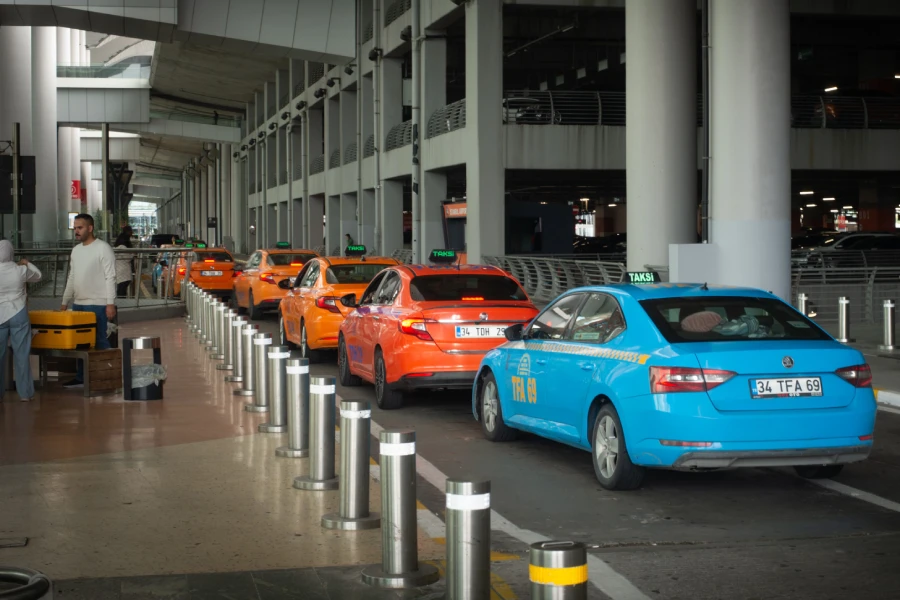
Options in descending order of predictability: a pre-arranged car, the official taxi queue (use only the official rank — do not accept offers inside the terminal), the airport express rail or metro, and ride-hailing apps. With luggage and jet lag, a pre-booked car is worth it. Orisene clients are met at the gate and driven directly to their accommodation.
4.3 Getting around the city
- Metro — English signage is standard, security screening is routine, and journey times are predictable. The best option for timed appointments.
- DiDi and taxis — DiDi (滴滴出行) is the default choice and has an English interface; typing a destination into the app beats pronouncing it. Keep the Chinese-language address of your hotel and hospital saved as text you can paste into the search field. Street-hailed taxis work too, though drivers rarely speak English.
- Hotel concierge — asking the front desk to call a car and tell the driver where to go remains the lowest-friction option in China, and it works even if your Chinese is zero.
4.4 Between cities
High-speed rail is excellent and can be booked with a passport through the official 12306 channel — Guangzhou to Shenzhen takes about half an hour. For Boao Lecheng in Hainan, fly to Haikou or Sanya and continue by road; build the transfer in as a separate leg rather than assuming a same-day connection. Always leave a margin between an inter-city journey and a hospital appointment.
4.5 If mobility is limited
Tell us — or your hotel — in advance. Large tertiary hospitals generally have accessible entrances and wheelchairs, but entrances differ and knowing which one to use beforehand matters. Accessible vehicles can be arranged in Guangzhou, Shenzhen and Hainan.
5. Where to stay
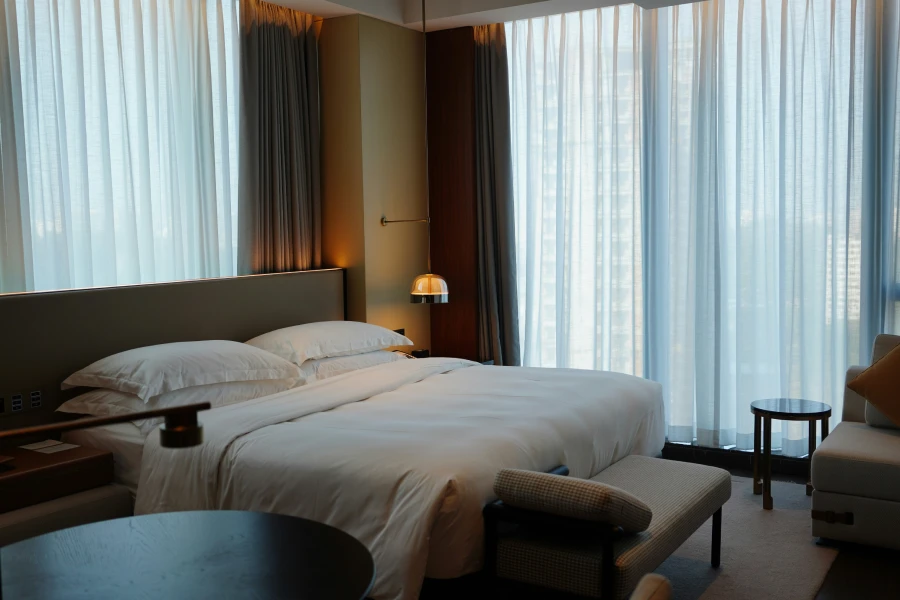
5.1 Five criteria for choosing your hotel
- Confirm the hotel can register foreign guests. Not every property in China is able to process foreign-passport registration. It is the most commonly overlooked detail in medical travel planning, and it is discovered at 11pm at the front desk.
- Within 15 to 20 minutes of the hospital by car. Fasting morning tests, unplanned re-visits and results collection all punish distance.
- A room you can actually rest in — blackout curtains, controllable air conditioning, reliable hot water, a comfortable bed. Recovery is part of the trip.
- A mini fridge in the room, if any medication needs refrigeration.
- Ability to issue a proper invoice (fapiao) — your insurer will likely require one.
5.2 Stays longer than a week
Serviced apartments become better value once you pass about seven days: a kitchen, laundry, and a space that does not feel like a hotel room during a waiting period. Confirm registration and extension procedures at booking, since long-stay arrangements can differ from nightly stays.
5.3 Check-in basics
Registration requires your physical passport — a photocopy or a photo on your phone will not do. Once in the room, sort out four things on the first evening: the Wi-Fi, whether your plugs fit (China runs on 220V, and socket types vary, so bring an adaptor), the front desk’s car-booking number, and where the nearest pharmacy is.
5.4 How the three cities differ
| City | What to expect |
|---|---|
| Guangzhou | Mature neighbourhoods around the major hospitals, dense metro coverage, excellent food within walking distance of most facilities. Best all-round choice for a first visit. |
| Shenzhen | Newer city and newer hotel stock, but the leading hospitals are more spread out — choose accommodation after the appointment location is fixed, not before. |
| Boao Lecheng (Hainan) | Resort-like, quiet, well suited to combining care with genuine rest. Limited commercial infrastructure nearby, so plan shopping and dining accordingly. Access is via Haikou or Sanya. |
6. Daily life basics
Small frictions, listed because they are the ones people mention afterwards.
- Power: 220V / 50Hz. Bring a universal adaptor and a power bank.
- Water: tap water is not generally drunk directly — use bottled water or the kettle in your room. Around hospital visits, stick to simple, cooked food.
- Weather: South China and Hainan are humid; indoor air conditioning is aggressive. A light layer solves the contrast. Watch typhoon forecasts between May and November.
- Restrooms: carry tissues and hand sanitiser. Not all public facilities supply them.
- Time: the whole country runs on Beijing time (UTC+8), no daylight saving. Outpatient clinics concentrate in the morning and resume early afternoon; banks and government offices keep weekday hours.
- Medication: a reasonable quantity for personal use is normally acceptable, with the original prescription and an English description. Controlled substances — codeine-containing products, for example — are strictly regulated and may require a medical certificate. Never mail medication into China; check the customs list before you fly.
- Etiquette: do not photograph other patients or clinical areas. Chinese doctors tend to be direct in how they speak; brevity is a style, not a verdict.
7. How a hospital visit actually works
Knowing the sequence in advance removes most of the anxiety from the day itself.
- Real-name registration. Every step is tied to your identity document. Carry your passport — it is the only thing that works.
- The order is different from what you may expect: registration → triage or check-in → payment → consultation → tests → results → follow-up consultation. Payment sits in the middle of the process, not at the end. This surprises visitors more than anything else on the list.
- Mornings are the busiest. Arrive ahead of your slot. Test results frequently take days, so plan for a second visit rather than a same-day conclusion.
- Take everything with you when you leave: a written diagnosis certificate (request an English version), the imaging files, medication instructions, the itemised bill and the official invoice.
- Language — plan for it, do not hope for it. Only a small number of large tertiary hospitals in China run an international medical department or a VIP outpatient unit with English-speaking staff, and that support stops at the door of those units. Everywhere else you will actually spend time — general outpatient clinics, imaging and laboratory departments, payment counters, the pharmacy, inpatient wards, the queue where reports are collected — the working language is Chinese, often with little English signage to fall back on. Treat English support as the exception rather than the rule. Professional medical interpretation is not an optional extra on a trip like this: a patient navigator interprets in real time during the consultation and handles the queues, the payment counters and the paperwork alongside you.
8. The final 24-hour checklist
Tick these the day before you fly
- Passport, visa, and a printed copy of the hospital appointment or invitation letter
- Medical summary and imaging files — originals plus a cloud backup
- Medication list using generic names, prescription, and enough supply for the full trip
- Insurance card, emergency hotline number, and the claim document checklist
- Roaming or eSIM activated; WeChat, maps, ride-hailing and translation apps installed and logged in
- Alipay or WeChat Pay bound to a card and tested with one small transaction
- Some cash, plus two cards on different networks stored separately
- Hotel confirmation, with foreign-guest registration confirmed, and the address saved in Chinese
- Airport transfer confirmed; destination addresses saved in an offline note
- Travel adaptor, power bank, basic over-the-counter items
- Family or colleagues briefed on the backup contact channel
- Buffer days built into the itinerary
9. Timeline at a glance
| When | Do this |
|---|---|
| T-60 | Check passport validity, open the visa conversation, confirm hospital and specialist, ask your insurer about pre-authorisation |
| T-30 | Book flights and accommodation, request the hospital invitation letter, assemble and translate records, arrange your companion |
| T-14 | Bind and test mobile payment, raise overseas card limits, prepare some cash |
| T-7 | Activate roaming or eSIM, install and log in to apps, check medication against customs rules |
| T-1 | Run the 24-hour checklist, print paper backups, confirm the airport transfer |
| Day 0 | Immigration, test connectivity and payment on arrival, check in, meet your navigator |
10. Frequently asked questions
Do I need a special medical visa for China?
No dedicated medical visa exists. Short predictable visits usually run on an L visa; longer or more complex plans are typically handled under an S2 visa supported by a hospital invitation letter. Confirm the category with the Chinese embassy or consulate serving your country — and note that visa-free entry schemes do not list medical treatment among their permitted purposes.
Will my international health insurance be accepted?
Usually not directly. Expect to pay at the hospital and claim afterwards. Ask your insurer for pre-authorisation and a claim document list before you travel, and keep every receipt, itemised bill and official invoice. A limited number of institutions — including several in Boao Lecheng — have international insurance settlement arrangements.
Can I use my Visa or Mastercard?
At major hotels, airports and large malls, yes. Elsewhere, assume not. Bind the card to Alipay or WeChat Pay before departure. Transactions of CNY 200 or less are typically free of platform service fee; above that, expect around 3%.
Will WhatsApp and Google work?
Not directly. Several overseas services cannot be reached from the Chinese mainland, including Google services, WhatsApp and Instagram. The compliant choice is a Virtual Private Network (VPN) approved for use in China. It also helps to arrange roaming or a travel eSIM that routes data through an overseas gateway — ask the provider directly whether those apps work on their network in mainland China, because many do and many don’t — and to agree backup channels with the people who need to reach you (WeChat, email, SMS, your hotel’s front desk), keeping important documents saved offline on the device.
Can I bring my medication?
A reasonable personal quantity is normally acceptable with the prescription and an English description. Controlled substances are strictly regulated — codeine-containing products, for instance, may require a medical certificate. Do not mail medication into China. Check the customs administration’s current guidance.
How close to the hospital should I stay?
Within 15–20 minutes by car, and confirm the hotel registers foreign guests. Fasting tests and unexpected re-visits make distance expensive.
Can a family member come with me?
Yes, and we recommend it. They need their own visa, insurance and passport validity check — apply together, not separately.
How much buffer time should I plan?
Two to three days beyond your last scheduled appointment. Reports often take several days, and specialists frequently want one further consultation once results are in.
Please note
This guide is general preparation information, not medical advice, and it is not a substitute for guidance from your treating clinicians or from official authorities. Visa categories, visa-free country lists, payment fees, spending limits and customs thresholds change over time: the figures here reflect official guidance as of October 2026 and should be re-checked against the National Immigration Administration, the General Administration of Customs, your bank and your insurer before you travel.
Orisene Health — independent medical concierge and patient navigation for international visitors to Guangzhou, Shenzhen, Foshan and Boao Lecheng. We are not a hospital or clinic, we accept no referral commissions, and we disclose nothing to third parties without written authorisation.
Written by the Orisene Patient Navigation Team · Last reviewed October 2026 · Privacy
Official sources to verify before you travel:
- National Immigration Administration (visas, visa-free transit, Hainan entry, foreign-card payment guidance)
- General Administration of Customs (currency declaration, medication carried on entry)
- Chinese embassy or consulate serving your country (visa category and document requirements)
- 12306 (rail ticketing with a passport) · Alipay and WeChat Pay official notices (fees and limits)